This raises several common questions: Can you use a blade from another brand? Do different reciprocating saws share the same blade connection? And does a blade that fits automatically deliver good cutting performance?
Understanding these differences can help you choose the right Reciprocating Saw Blade, avoid compatibility problems, and get more consistent results.
Are Reciprocating Saw Blades Really Universal?
In many cases, yes—but only within the limits of compatible blade holders and specifications.
Most conventional reciprocating saw blades use a standardized straight shank that slides into the saw's blade clamp and locks into position. This design allows many blades from different manufacturers to work with the same tool, provided their shank dimensions and connection requirements match.
However, universal compatibility should not be interpreted as guaranteed compatibility with every reciprocating saw. Some older tools, specialized models, or proprietary clamping systems may have different requirements.
It is also important to distinguish between physical compatibility and cutting suitability. A blade may fit securely into a saw but still be unsuitable for the material or cutting task.
In short, brand names do not necessarily determine compatibility. The blade connection and the tool's specifications matter much more.
What Makes a Reciprocating Saw Blade Compatible with a Tool?
Several factors determine whether a blade can be installed and used properly. The shank connection is the starting point, but dimensions and application requirements also matter.
Shank Design and Blade Clamp
The shank is the part of the blade that connects to the reciprocating saw. Unlike jig saw blades, which commonly use T-Shank and U-Shank designs, conventional reciprocating saw blades generally feature a straight insertion-style shank.
The blade clamp holds the shank in place while the saw moves the blade back and forth. Depending on the tool, the clamping mechanism may use a quick-release system or require a manual adjustment.
Before installing a replacement blade, check whether its shank is compatible with the tool's holder. A blade should lock securely without excessive movement. Never assume that a similar-looking connection guarantees a safe fit.
Blade Length and Thickness
Even when the shank fits, blade dimensions can affect cutting performance.
Blade length determines how deeply the blade can reach into a workpiece. Longer blades are useful for cutting thicker materials or working in certain confined positions, but excessive unsupported blade length can increase vibration and deflection.
Blade thickness also influences stability. Thicker blades generally offer greater rigidity for demanding cutting conditions, while thinner blades may provide more flexibility in certain applications.
Choosing the right dimensions means considering both the saw's specifications and the size of the material being cut.
Blade Type and Cutting Application
Compatibility also involves selecting a blade that can handle the intended material.
Different Reciprocating Saw Blade designs are developed for different applications:
Wood-cutting blades: Usually feature larger teeth and wider spacing for faster material removal.
Metal-cutting blades: Typically use finer teeth to handle metal sections and reduce tooth damage.
Bi-Metal blades: Combine a flexible blade body with harder cutting teeth, making them suitable for a range of demanding applications.
Carbide Teeth blades: Designed for specific heavy-duty cutting tasks where greater tooth wear resistance is required.
The correct choice depends on the workpiece, its thickness, and the cutting conditions rather than compatibility alone.
Can You Use Reciprocating Saw Blades from Different Brands?
Yes, in many situations, you can use a reciprocating saw blade from a different brand. The brand printed on the blade is generally less important than whether its shank fits the saw's blade holder and meets the tool manufacturer's requirements.
For example, if your reciprocating saw originally comes with Brand A blades, you may be able to replace them with compatible blades from Brand B or Brand C. This gives you more flexibility when choosing different blade materials, tooth configurations, and lengths.
However, there are a few things worth checking:
Blade connection: Confirm that the shank fits the tool's clamping system and locks securely.
Tool specifications: Check the user manual for any restrictions on blade dimensions or compatible designs.
Blade condition: Make sure the blade is straight, undamaged, and properly secured before operation.
One common mistake is assuming that two blades are interchangeable simply because their shanks look similar. Always verify the actual fit rather than relying on appearance alone.
How to Choose the Right Reciprocating Saw Blade for Your Tool
Once you have confirmed compatibility, the next step is choosing a blade that matches your cutting requirements.
A practical selection process involves four considerations:
Check the blade holder: Identify the connection type and confirm that the blade can be securely installed.
Choose the appropriate dimensions: Consider blade length and thickness based on the workpiece and cutting conditions.
Match the material: Select HCS, Bi-Metal, HSS, or Carbide-Tipped designs according to the material and application.
Consider cutting frequency: For demanding or repeated cutting tasks, prioritize suitable tooth designs and materials that offer the required wear resistance.
For example, cutting wooden boards requires a different tooth configuration from cutting metal pipes. Demolition work involving wood with embedded nails may require a more durable Bi-Metal or carbide-tipped blade.
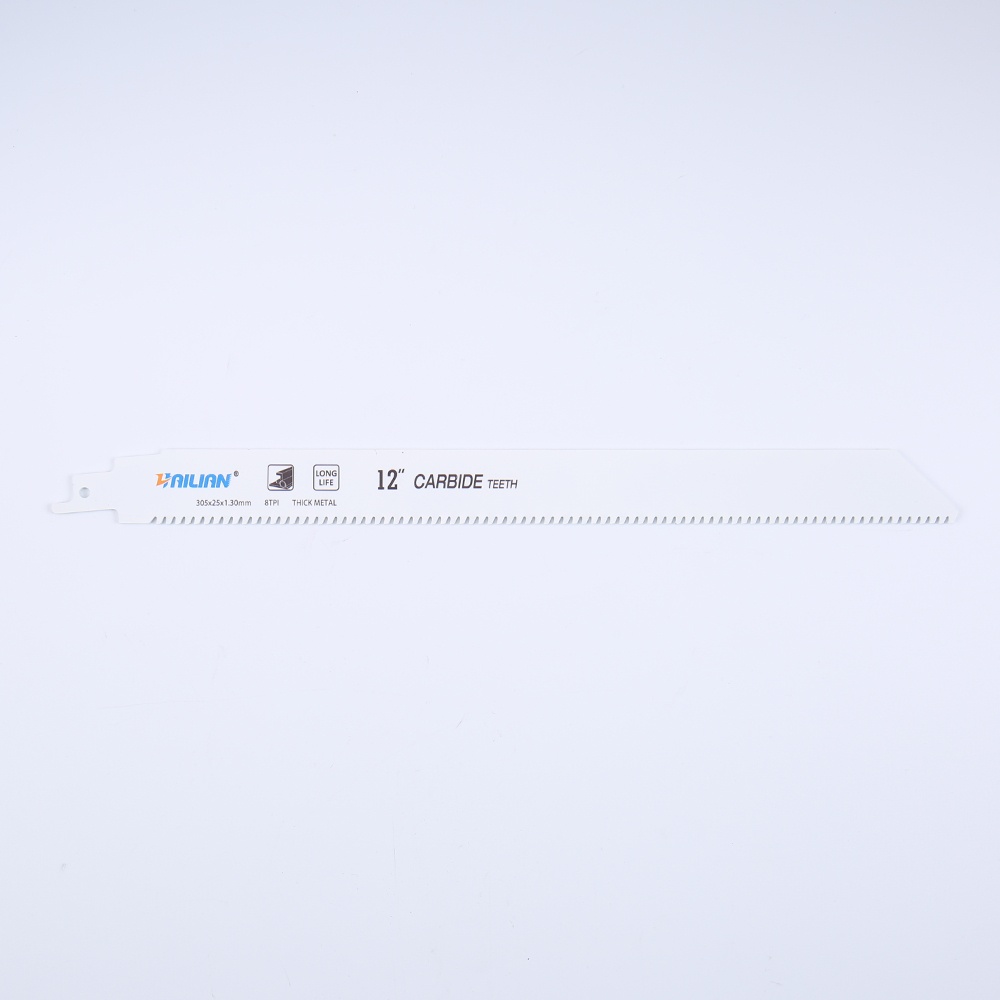
Hailian's Reciprocating Saw Blade range includes different models, such as 6-inch and 12-inch carbide-tooth blades, diamond-tooth blades, and blades with different tooth counts. The product range also covers applications such as wood cutting, metal pipe cutting, PVC processing, and demolition. This variety allows users to select a blade according to the material and cutting conditions rather than relying on one blade for every task.
Does Universal Compatibility Mean Every Blade Performs the Same?
Definitely not. A blade that fits your reciprocating saw does not necessarily deliver the same cutting performance as another compatible blade.
Several design features influence how a blade performs:
| Blade Feature | Effect on Cutting Performance |
| Tooth design | Influences cutting speed, vibration, and finish |
| TPI | Determines tooth spacing and material engagement |
| Blade material | Affects wear resistance and toughness |
| Blade thickness | Influences rigidity and cutting stability |
| Blade length | Determines reach and potential cutting depth |
This is why choosing a blade based only on whether it fits your machine can lead to disappointing results. Compatibility gets the blade installed, but its design determines whether it performs well in the intended application.
Are Reciprocating Saw Blades Universal? What Should You Remember?
Reciprocating Saw Blades offer broad compatibility across many tools, and different brands can often be used interchangeably. However, not every blade is suitable for every reciprocating saw.
Before choosing a replacement, check the blade connection, tool specifications, dimensions, and intended cutting material. These details help prevent installation problems and ensure that the blade can operate under appropriate conditions.
Ultimately, the right Reciprocating Saw Blade should fit your tool securely, match the material you are cutting, and deliver the performance your application requires. Universal compatibility is useful, but choosing the right blade design is what makes the difference in everyday cutting work.